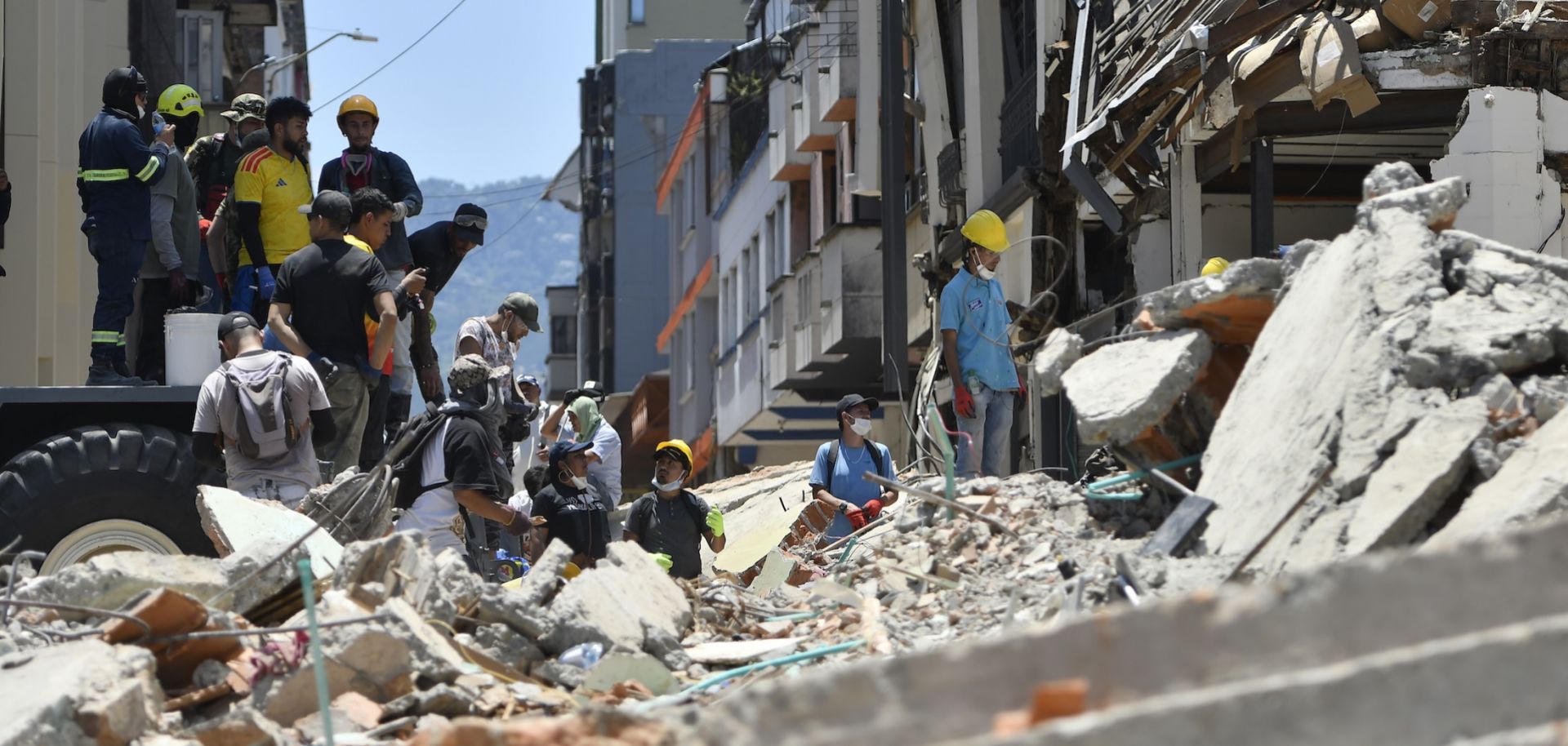
In Colombia, the recent earthquake will test the new government's response capacity while exacerbating fiscal and security constraints and exposing companies to supply chain delays, security and compliance risks. On Aug. 10, a magnitude 7.4 earthquake struck western Colombia. As of Aug. 12, the reported death toll had reached 254, with 2,500 injured and nearly 200 missing. Damage was concentrated in mid-sized Andean cities of Colombia's coffee belt in the departments of Risaralda, Caldas and Quindio; in Cali, the country's third-largest city, and other regions of Valle del Cauca; and parts of the Choco department, with buildings, homes, hospitals, schools and transport infrastructure damaged or destroyed. Authorities closed six airports for structural inspection while at least 18 roads were affected, and electricity, water, health services and mobile coverage remained interrupted in multiple areas as of Aug. 12. President Abelardo de la Espriella, who only took office on Aug. 7, traveled...