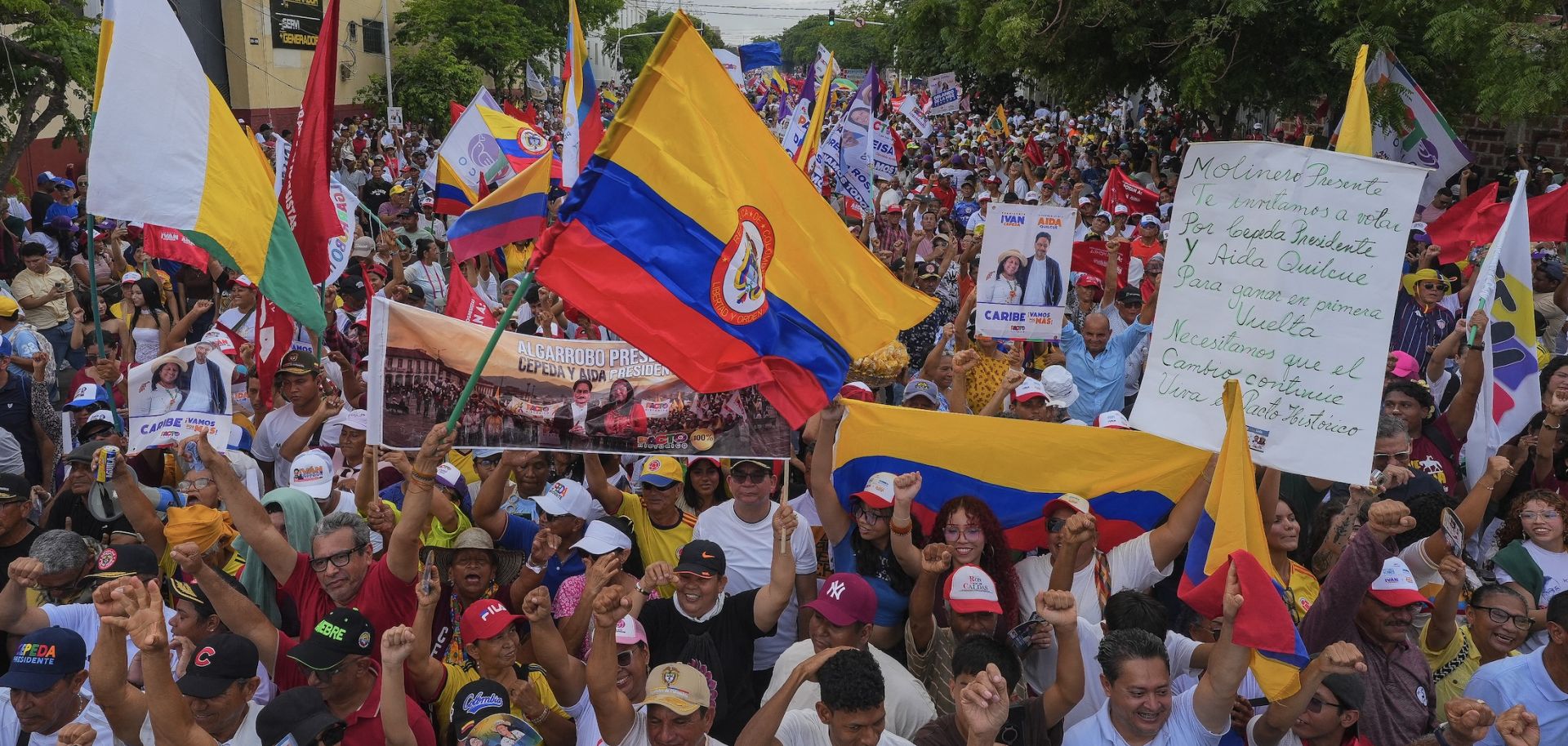
Colombia will hold the first round of its presidential election on May 31, with a runoff on June 21 if no candidate receives more than 50% of the vote. The winner takes office on Aug. 7. On March 8, voters elected a new bicameral Congress, which resulted in a fragmented legislature in which the leftist Historic Pact won the most seats in both chambers (25 of 103 seats in the Senate and 42 of the 183 seats in the House of Representatives), while the center-right Democratic Centre came in second. President Gustavo Petro is constitutionally barred from re-election. The next president will inherit a polarized society, a declining fiscal position, a deteriorating security environment and growing coca cultivation and cocaine production. From an international perspective, Colombia-U.S. relations have been fraught, while Bogota signed a Belt and Road Initiative cooperation agreement with China in 2025.
If left-wing Senator Ivan Cepeda (of the...