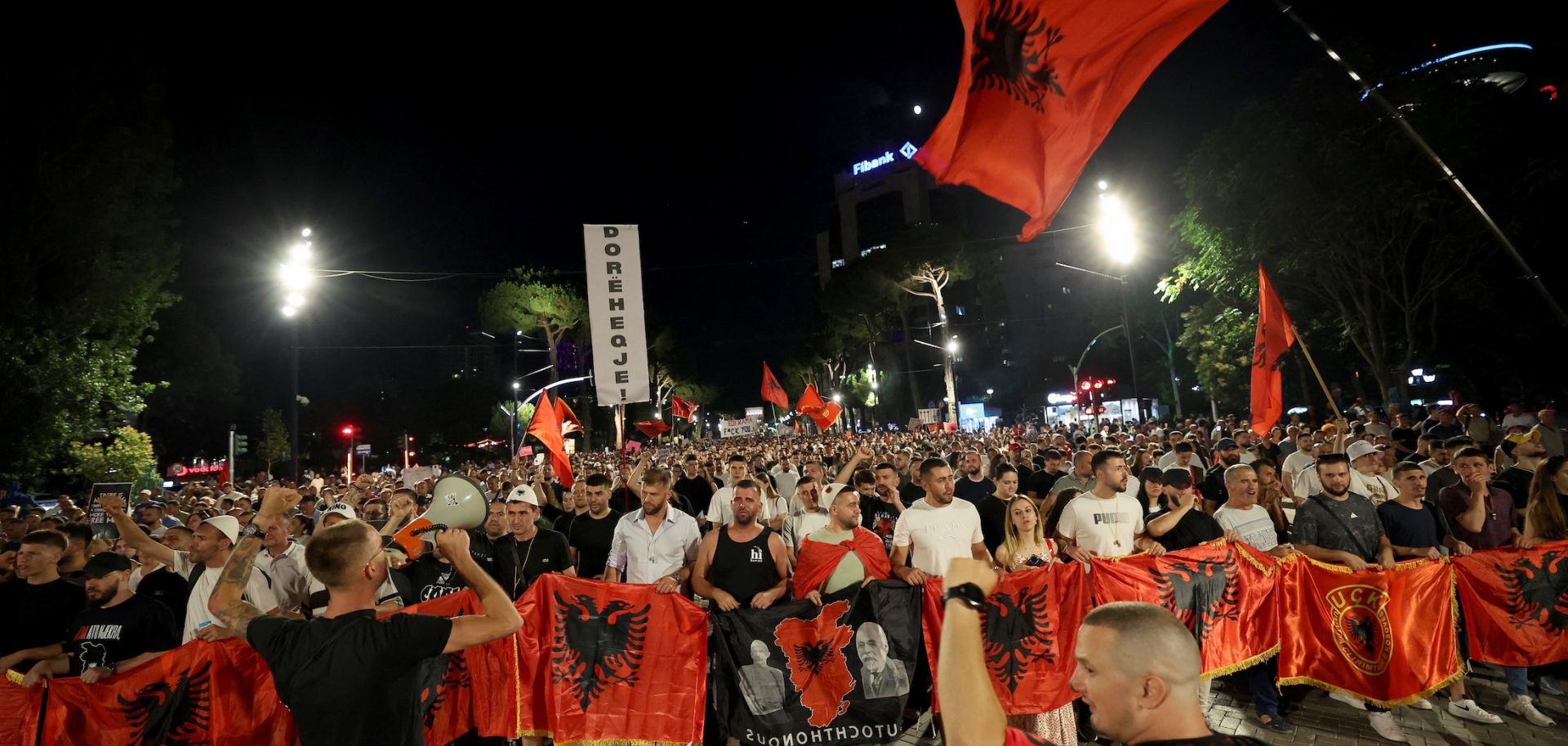
Sustained protests in Serbia and Albania are unlikely to force immediate changes of government, but will continue to erode political stability and complicate EU accession efforts, while other countries in the Western Balkans may see episodic social unrest. In recent weeks, Serbia and Albania have seen large anti-government protests. In Serbia, demonstrations initially triggered by the collapse of the Novi Sad railway station canopy in 2024, which resulted in 16 deaths, have developed into the most significant challenge to President Aleksandar Vucic in more than a decade. In Albania, protests that started in May have evolved from opposition to a controversial coastal development by a private equity firm led by Jared Kushner into a wider critique of corruption, governance and political concentration of power under Prime Minister Edi Rama. Although the two movements are not organizationally linked and have arisen from different immediate triggers, they reflect common structural grievances, including...