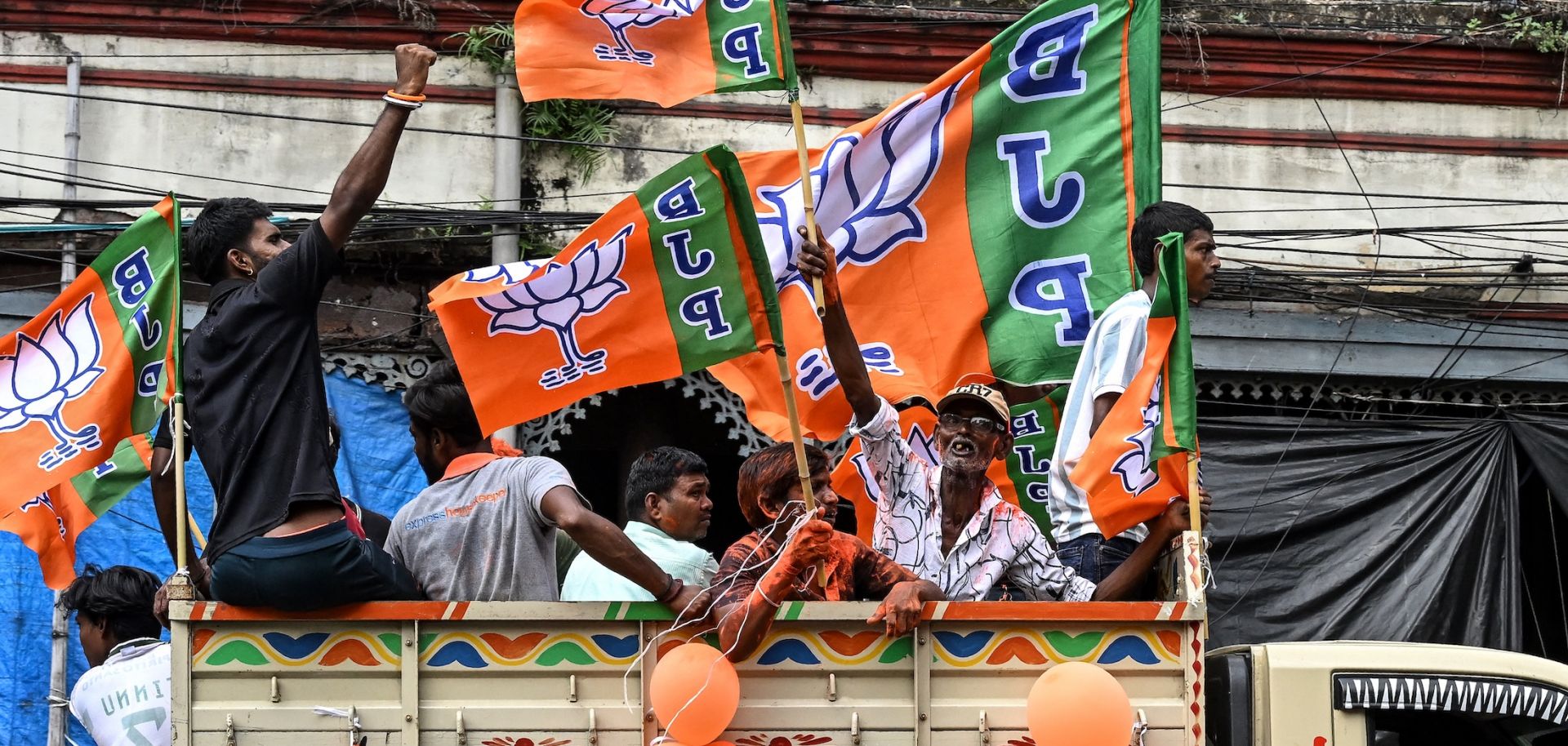
In India, the ruling Bharatiya Janata Party's expanding control across state governments will likely enable greater coordination with the central government on citizenship and labor policies, and gradually strengthen the party's position in Parliament; but while this could renew momentum for long-term governance and constitutional reform agendas, significant parliamentary thresholds and federal resistance are likely to constrain their passage. On May 4, the Election Commission of India announced the results of the 2026 state assembly elections, held between April 9 and April 29 across four states and one Union Territory. The most significant result came in West Bengal, where Prime Minister Narendra Modi's Bharatiya Janata Party (BJP) defeated the incumbent All India Trinamool Congress government led by Mamata Banerjee, marking a historic breakthrough in a state long resistant to BJP expansion. In Kerala, the Congress-led United Democratic Front (UDF) ended the decade-long rule of the Left Democratic Front, while in...