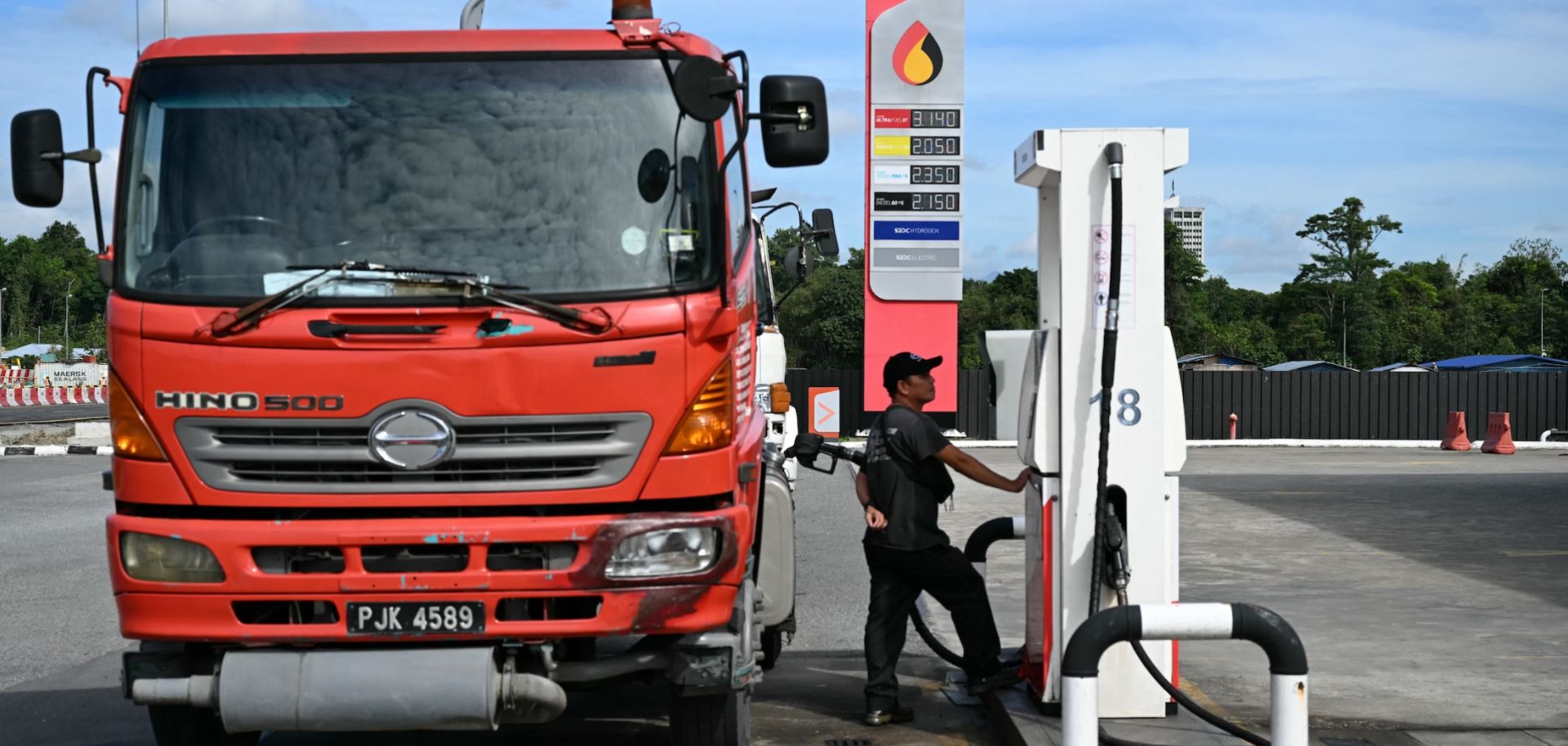
Malaysia is absorbing the Iran war's energy shock through fuel subsidies, but if higher prices persist, the government may have to sacrifice economic reforms to preserve political support ahead of the next election. Following the onset of the U.S.-Israeli campaign against Iran on Feb. 28 and the resulting disruption to shipping through the Strait of Hormuz, Malaysia has sought to shield domestic consumers from rising global fuel costs by maintaining subsidized gasoline prices. On March 11, Malaysia's finance ministry confirmed that the government would keep the price of RON95 gasoline at roughly $0.51 per liter (RM1.99) under the BUDI95 targeted subsidy program, thereby preventing higher global oil prices from passing through to consumers. The decision significantly increased government spending on fuel subsidies as the state compensates fuel retailers for the gap between fixed pump prices and higher market-based costs (albeit with part of the fiscal burden offset by revenues from...