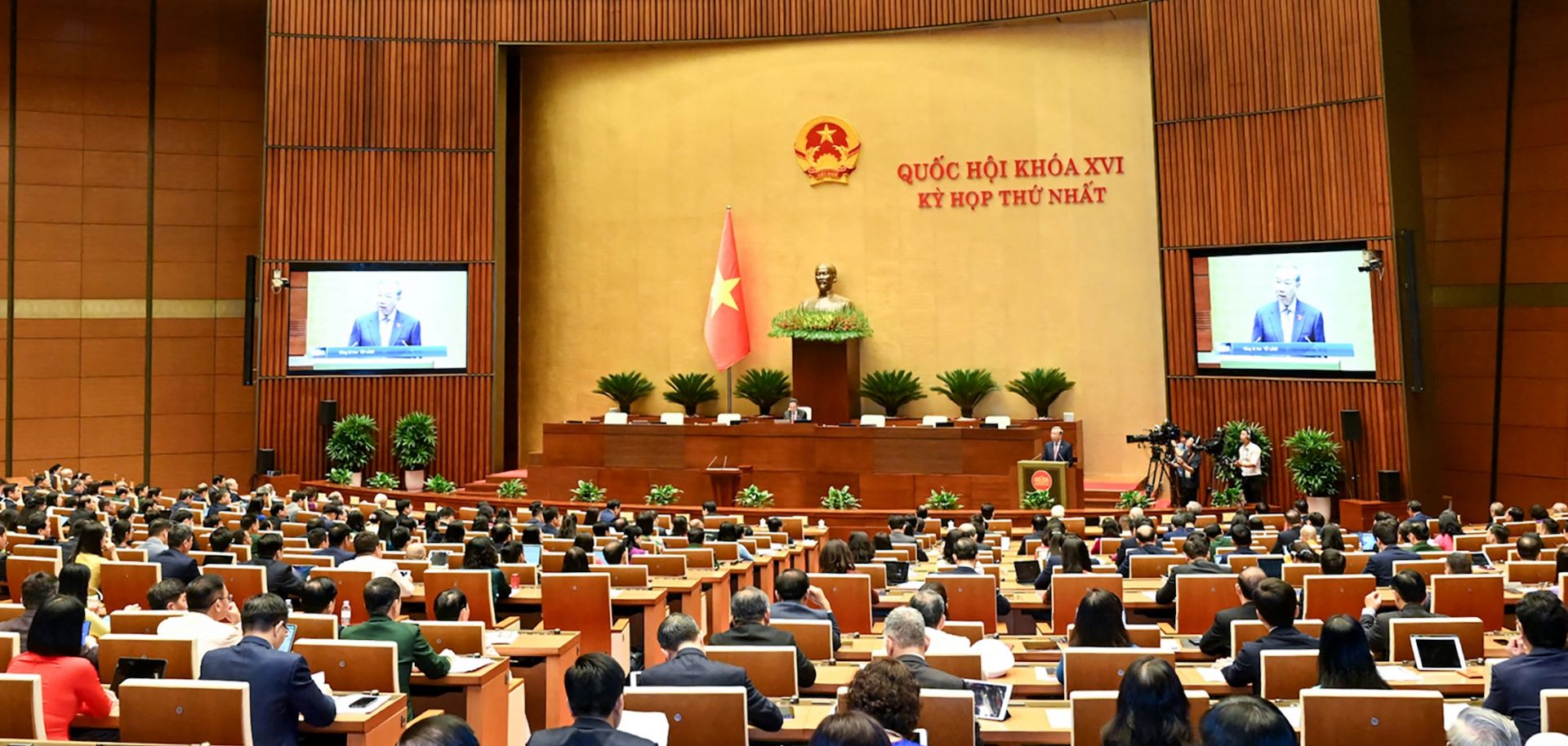
Vietnam's latest leadership appointments merge party and state authority into a single individual, signaling a shift toward more centralized, top-down and security-focused governance to improve policy coordination and execution, albeit with increased risks from reduced institutional checks and implementation distortions. On April 7, Vietnam's National Assembly unanimously elected Communist Party General Secretary To Lam as state president and Party Central Organization Commission head, Le Minh Hung, as prime minister for the 2026-2031 term, completing the top leadership appointments of the new legislative cycle. Lam, Vietnam's de facto top leader, now simultaneously holds the top party position and the presidency, while Hung -- a former central bank governor -- assumes control of the government. In his inaugural remarks, Lam emphasized maintaining political stability, strengthening national defense and security, and pursuing rapid, sustainable economic development. Hung outlined priorities including institutional reform, administrative streamlining and building a modern government oriented toward services capable...